Analysis of Botanical Literacy Levels Among Senior High School Students in Urban Schools
DOI:
https://doi.org/10.32938/jbe.v11i2.10002Keywords:
Botanical literacy; Biology learning; Plant identification; High school students; Educational surveyAbstract
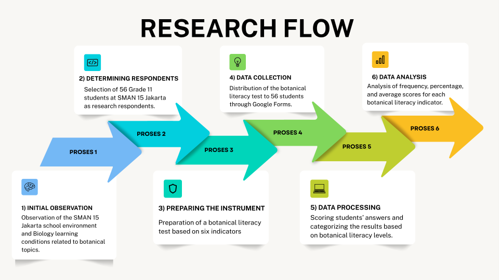
This study aims to analyze the level of botanical literacy among 11th-grade students at SMAN 15 Jakarta. The research employed a survey method using a questionnaire instrument distributed via Google Form, involving 56 students (25 male and 31 female) who had studied botany material within the Biology curriculum. The data were analyzed using a descriptive qualitative approach by classifying scores into botanical literacy categories, calculating frequencies and percentages, and analyzing the relationships between each question indicator to determine the students' level of botanical literacy. The results showed that 15 students (26.79%) were in the Very Low category, 3 students (5.36%) in the Low category, 16 students (28.57%) in the Fair category, 18 students (32.14%) in the High category, and 4 students (7.14%) in the Very High category. Based on the indicators, the General Characteristics of Plants indicator obtained the highest average score (78.57), while the Plant Identification indicator received the lowest average score (28.57). These findings indicate that students have a better understanding of basic plant concepts than the ability to identify plants directly. This research provides an overview of the variation in students' botanical literacy levels and can serve as a foundation for developing more contextual and applicative Biology learning models to enhance comprehension, particularly in the aspects of plant identification and classification.
References
Amizera, S., Destiansari, E., & Oktavia, N. (2023). Development of audio-visual media based on video tutorials to support digital literacy in practicum activities. Jurnal Pendidikan MIPA, 24(4), 901–911. https://doi.org/10.23960/jpmipa/v24i4.pp901-911
Ayuningrum, L. S., Setyaningrum, M., Agustin, M. R., & Sabrina, M. A. (2024). Ethnobotanical study of homegarden by local communities in the urban area of Surakarta City, Central Java, Indonesia. Asian Journal of Ethnobiology, 7(2). https://doi.org/10.13057/asianjethnobiol/y070201
Daniel, J., Russo, A., & Burford, B. (2023). How might we utilise the concept of botanic gardens' in urban contexts to challenge plant blindness? Biodiversity and Conservation, 32(7), 2345–2364. https://doi.org/10.1007/s10531-023-02607-w
Darmoatmodjo, L. M. Y. D., Epriliati, I., Widyawati, P. S., Purwanto, A., & Ganjari, L. E. (2024). Peningkatan literasi biodiversitas menggunakan model kebun botani di Madiun. Warta LPM, 237–248. https://doi.org/10.23917/warta.v27i2.4134
Hernawati, D., Maulina, D., Fitriani, R., & Putra, R. R. (2022). Bio-literacy perspective: A study of the implementation of outdoor learning-based science process skills in plant introduction. Jurnal Bioedukatika, 8(1), 31–37. https://doi.org/10.26555/BIOEDUKATIKA.V8I1.15067
Hidayah, S. N., Wisanti, W., & Putri, E. K. (2018). Pengembangan species identification guide pohon dan perdu sebagai sarana identifikasi keanekaragaman tumbuhan di sekolah. Berkala Ilmiah Pendidikan Biologi (BioEdu), 7(2), 338–346.
Husamah, H., Permana, T. I., & Rahardjanto, A. (2025). Botanical literacy in the last ten years: Insights from Scopus. Prisma Sains: Jurnal Pengkajian Ilmu dan Pembelajaran Matematika dan IPA IKIP Mataram, 13(2), 233–253. https://doi.org/10.33394/j-ps.v13i2.15160
Indah, R. A., & Fadilah, M. (2024). Literature review: Pengaruh media pembelajaran literasi visual terhadap hasil belajar biologi siswa SMA. BIODIK, 10(2), 188–198. https://doi.org/10.22437/biodik.v10i2.33803
Kristyowati, R., & Purwanto, A. (2019). Pembelajaran literasi sains melalui pemanfaatan lingkungan. Scholaria: Jurnal Pendidikan dan Kebudayaan, 9(2), 183–191. https://doi.org/10.24246/j.js.2019.v9.i2.p183-191
Krosnick, S. E., Ramey, K., & Baker, J. C. (2018). The Pet Plant Project: Treating plant blindness by making plants personal. The American Biology Teacher, 80(5), 339–345. https://doi.org/10.1525/abt.2018.80.5.339
Maskour, L., Alami, A., Agorram, B., & Zaki, M. (2016). Study of Some Learning Difficulties in Plant Classification Among University Students. ICRES International Conference on Research in Education and Sciences. ISRES Publishing. 5, 294-297.
Muchlis, A. F. (2023). Metode penelitian survei-kuesioner untuk kesesakan dan privasi pada hunian asrama. Jurnal Lingkungan Binaan Indonesia, 12(3), 154–163. https://doi.org/10.32315/jlbi.v12i3.252
Munif, M., Yelianti, U., Sukmono, T., Harlis, H., & Kartikasari, W. (2019). Pelatihan pembuatan herbarium sebagai media pembelajaran biologi di SMAN 11 Muaro Jambi. Jurnal Karya Abdi Masyarakat, 3(2), 170–175. https://doi.org/10.22437/jkam.v3i2.8479
Novianti, R. (2025). Pengembangan instrumen tes literasi botani untuk peserta didik SMA [Undergraduate thesis], Universitas Negeri Jakarta.
Pratama, F., Banila, L., Kartika Sari, I. H., Dayuwati, T. I., & Suryanda, A. (2022). Problematika pembelajaran biologi urban dan solusinya. DIAJAR: Jurnal Pendidikan dan Pembelajaran, 1(3), 244–249. https://doi.org/10.54259/diajar.v1i3.914
Priatna, T. (2017). Prosedur penelitian pendidikan. CV Insan Mandiri.
Rinata, S., Yuwono, A., & Insani, N. H. (2023). Pengembangan media Jenga Aksara Jawa dalam pembelajaran membaca dan menulis teks berhuruf Jawa. Piwulang: Jurnal Pendidikan Bahasa Jawa, 11(1), 92–109. https://doi.org/10.15294/piwulang.v11i1.57806
Rizkamariana, F., Diana, S., & Wulan, A. R. (2019). Penerapan Project Based Learning untuk melatih kemampuan literasi tumbuhan abad 21 pada siswa SMA. Assimilation: Indonesian Journal of Biology Education, 2(1), 19–23. https://doi.org/10.17509/aijbe.v2i1.15203
Safrina, S., Novida, R., Abidin, A. H., Salsabilla, L. F., & Suryanda, A. (2022). Pengaruh wilayah urban terhadap peserta didik pada pembelajaran biologi. Jurnal Biologi Edukasi, 14(1), 1–5. https://doi.org/10.24815/jbe.v14i1.26206
Suhadi, A. P., Ristanto, R. H., Sigit, D. V., & Supriyatin, S. (2023). Assessment of biological literacy for high school students. Biosfer: Jurnal Pendidikan Biologi, 16(1), 25–36. https://doi.org/10.21009/biosferjpb.24765
Downloads
Published
How to Cite
Issue
Section
License
Copyright (c) 2026 BIO-EDU: Jurnal Pendidikan Biologi

This work is licensed under a Creative Commons Attribution-ShareAlike 4.0 International License.
The Authors submitting a manuscript do so on the understanding that if accepted for publication, the copyright of the article shall be assigned to BIO-EDU: Jurnal Pendidikan Biologi and Departement of Biology Education, Universitas Timor as the publisher of the journal. Copyright encompasses rights to reproduce and deliver the article in all form and media, including reprints, photographs, microfilms, and any other similar reproductions, as well as translations.
BIO-EDU journal and Departement Biology Education, Universitas Timor, and the Editors make every effort to ensure that no wrong or misleading data, opinions, or statements be published in the journal. In any way, the contents of the articles and advertisements published in BIO-EDU are the sole and responsibility of their respective authors and advertisers.
Users of this website will be licensed to use materials from this website following the Creative Commons Attribution-ShareAlike 4.0 International License.