Challenges of the Science EduXplore Program and Alternative Solutions in Biology Learning through Outdoor Learning and Digital Transformation
DOI:
https://doi.org/10.32938/jbe.v11i1.10385Keywords:
Science EduXplore, Outdoor Learning, Digital Transformation, Biology Learning, Alternative SolutionAbstract
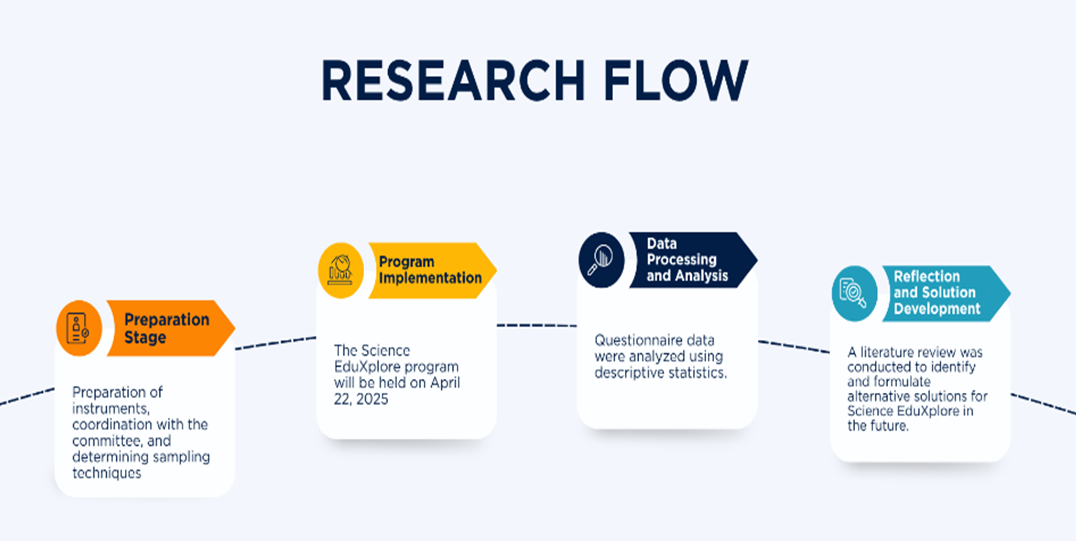
This study aims to analyze the implementation challenges of the Science EduXplore 2025 program and identify alternative solutions for its future development. The program represents an innovative biology learning model that integrates outdoor learning and digital transformation approaches. This research employed a descriptive quantitative method with a cross-sectional design. Data were collected through questionnaires completed by 30 junior high school participants and analyzed using descriptive statistics. The results indicate that participants generally responded positively to the program, particularly in terms of engagement, meaningfulness, and facilities. However, several challenges were identified, including limited exploration time, difficulties in using scientific tools, and the perceived relevance of the material. Based on these findings, alternative solutions were proposed, such as utilizing QR codes, mobile-based scientific sensor applications, and developing interactive e-modules. In addition, a differentiated approach based on educational levels (junior and senior high school) was implemented to align the complexity of the material. These findings suggest that integrating outdoor learning with digitalization holds significant potential to foster active, contextual, and reflective biology learning, and can serve as a foundation for sustainable educational program development.
References
Behrendt, M., & Franklin, T. (2014). A Review of Research on School Field Trips and Their Value in Education. International Journal of Environmental and Science Education, 9(3), 235–245. https://doi.org/10.12973/ijese.2014.213a
Boncukçua, G., & Gök, G. (2023). A problem-based learning activity to learn about sustainable development. Science Activities, 60(4), 185–200. https://doi.org/10.1080/00368121.2023.2258353
Cabrera, A. N., Droste, A., Heusinkveld, B. G., & Steeneveld, G. J. (2021). The Potential of a Smartphone as an Urban Weather Station—An Exploratory Analysis. Frontiers in Environmental Science, 9(August), 1–16. https://doi.org/10.3389/fenvs.2021.673937
Chapple, D., Weir, B., & Martin, R. S. (2017). Can the incorporation of quick response codes and smartphones improve field-based science education? International Journal of Innovation in Science and Mathematics Education, 25(2), 49–71.
Cresswell, J. W., & Creswell, J. D. (2017). Research Design: Qualitative, Quantitative, and Mixed Methods Approaches. Sage Publications.
Elfil, M., & Negida, A. (2017). Sampling methods in Clinical Research ; an Educational Review. Emergency, 5(1), 3–5.
Erna, Mahrudin, & Irianti, R. (2025). The Practicality of Local Potential-Based Booklets as a Material for Enriching the Concept of Biodiversity in High School. Bio-Edu: Journal of Biology Education, 10(2), 95–105. https://doi.org/https://doi.org/10.32938/jbe.v10i2.7781
Fleischner, T. L., Espinoza, R. E., Gerrish, G. A., Greene, H. W., Kimmerer, R. W., Lacey, E. A., Pace, S., Parrish, J. K., Swain, H. M., Trombulak, S. C., Weisberg, S., Winkler, D. W., & Zander, L. (2017). Teaching Biology in the Field: Importance, Challenges, and Solutions. BioScience, 67(6), 558–567. https://doi.org/10.1093/biosci/bix036
Graaf, A. de, Westbroek, H., & Janssen, F. (2019). A Practical Approach to Differentiated Instruction: How Biology Teachers Redesigned Their Genetics and Ecology Lessons. Journal of Science Teacher Education, 30(1), 6–23. https://doi.org/10.1080/1046560X.2018.1523646
Ho, S. J., Hsu, Y. S., Lai, C. H., Chen, F. H., & Yang, M. H. (2022). Applying Game-Based Experiential Learning to Comprehensive Sustainable Development-Based Education. Sustainability (Switzerland), 14(3), 1–20. https://doi.org/10.3390/su14031172
Juanda, A., Maulida, A. N., Gloria, R. Y., & Nasrudin, D. (2021). Learning Observation: The Demands of 21st Century Biology Learning in Senior High School. Indonesian Journal of Science Education, 9(3), 445–458. https://doi.org/10.24815/jpsi.v9i3.20162
Nurhasnah, N., Miarsyah, M., & Rusdi, R. (2019). The Effectiveness of Field Trip in Biology Learning towards Students' Increased Concern for Biodiversity Values. Indonesian Journal of Science and Education, 3(1), 43. https://doi.org/10.31002/ijose.v3i1.860
Rose, A. E., Nency, A., Sudira, E., Haria, Y., & Suryanda, A. (2024). Exploration of Innovative Strategies for Biology Learning in the 21st Century. TAUGHT: Journal of Education and Learning, 3(1), 102–107. https://doi.org/10.54259/diajar.v3i1.2270
Souza, C. M. de, & Santos, C. B. dos. (2019). Practical Lessons in Biology Education: Challenges and Possibilities. ID on Line Journal of Psychology, 13(45), 426–433. https://doi.org/10.14295/idonline.v13i45.1839
Staacks, S., Hütz, S., Heinke, H., & Stampfer, C. (2018). Advanced Tools for Smartphone-Based Experiments : Phyphox. Physics Education, 53, 1–6.
Sudijono, A. (2010). Introduction to Education Statistics. Raja Grafindo Persada.
Taherdoost, H. (2016). Sampling Methods in Research Methodology ; How to Choose a Sampling Technique for Research. International Journal of Academic Research in Management (IJARM), 5(2), 18–27.
Whitmeyer, S. J., Atchison, C., & Collins, T. D. (2020). Using Mobile Technologies to Enhance Accessibility and Inclusion in Field-Based Learning. GSA Today, 30(9), 4–10. https://doi.org/10.1130/GSATG462A.1
Yeung, W. K., & Sun, D. (2021). An exploration of inquiry-based authentic learning enabled by mobile technology for primary science. International Journal of Mobile Learning and Organisation, 15(1), 1–28. https://doi.org/10.1504/IJMLO.2021.111594
Zhong, T. C., Mat Saad, M. I., & Che Ahmad, C. N. (2022). Integrating Technology-Mediated Learning in Biology Education (Histology): A Systematic Literature Review. EDUCATUM Journal of Science, Mathematics and Technology, 9(1), 48–57. https://doi.org/10.37134/ejsmt.vol9.1.5.2022
Downloads
Published
How to Cite
Issue
Section
License
Copyright (c) 2026 BIO-EDU: Jurnal Pendidikan Biologi

This work is licensed under a Creative Commons Attribution-ShareAlike 4.0 International License.
The Authors submitting a manuscript do so on the understanding that if accepted for publication, the copyright of the article shall be assigned to BIO-EDU: Jurnal Pendidikan Biologi and Departement of Biology Education, Universitas Timor as the publisher of the journal. Copyright encompasses rights to reproduce and deliver the article in all form and media, including reprints, photographs, microfilms, and any other similar reproductions, as well as translations.
BIO-EDU journal and Departement Biology Education, Universitas Timor, and the Editors make every effort to ensure that no wrong or misleading data, opinions, or statements be published in the journal. In any way, the contents of the articles and advertisements published in BIO-EDU are the sole and responsibility of their respective authors and advertisers.
Users of this website will be licensed to use materials from this website following the Creative Commons Attribution-ShareAlike 4.0 International License.