Anatomical Study of Pumpkin (Cucurbita moschata ‘Butternut’)
DOI:
https://doi.org/10.32938/jbe.v11i1.9722Keywords:
Anatomy; Cucurbitaceae; Pumpkin; MorphologyAbstract
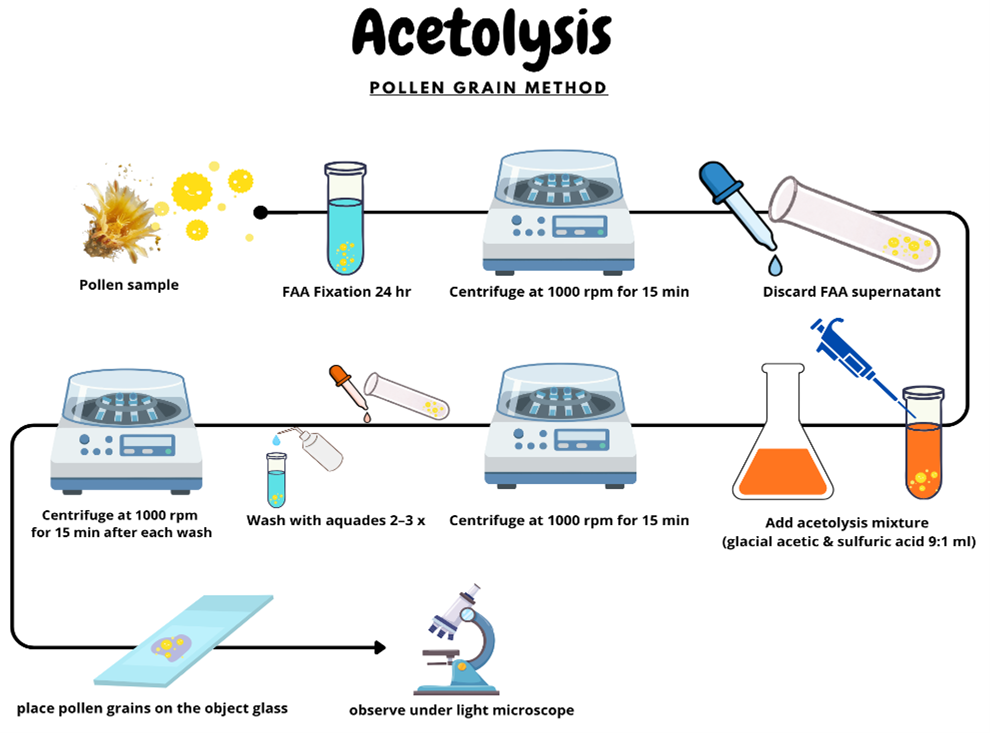
Yellow Pumpkin (Cucurbita moschata) is a fruit and vegetable from the Cucurbitaceae family that has striking structural variations both microscopic and macroscopic. The study of the anatomical structure of the Yellow Pumpkin as a whole is still limited, so this study aims to study the anatomical structure of vegetative and generative organs in the species Cucurbita moschata. The research method is free-hand section for cross-sectional incisions of roots, stems, leaves, and paradermal leaves. Acetolysis method to obtain the morphological structure of flower pollen. This research is descriptive research. The parameters observed were in the form of organ constituent tissues, trichomes and stomata types, tracheal and fiber types, and pollen types. The results of the study showed that the root tissue was made up from the outside in, namely the epidermis, cortex, periticle, and vascular bundles (xylem and phloem). The trunk consists of trichoma-like epidermal tissue, cortex, xylem and phloem, as well as the trachea (spiral, annular and scalariform type) and libriform-type fibers. The leaf structure is composed of the epidermis above the polygonal shape and the lower form of the anticlinal sinuous, the anomocytic stomata type, the amphistomatic stomata distribution, and the leaf trichomes exist that are glandular and non-glandular. Pollen is spherical in shape, echinate-type exine, and is classified as pantoporate-type aperture. The results of this study can be used as basic data in the study of the anatomical structure of plants, especially cucurbitaceae.
References
Abbas, N., Zafar, M., Ahmad, M., Althobaiti, A. T., Ramadan, M. F., Makhkamov, T., Gafforov, Y., Khaydarov, K., Kabir, M., Sultana, S., Majeed, S., & Batool, T. (2022). Tendril Anatomy: A Tool for Correct Identification Among Cucurbitaceous Taxa. Plants, 11(23). https://doi.org/10.3390/plants11233273
Abdi, R. I., Sartika Ami, M., Wulandari, A., Wahab, K. A., & Jombang, H. (2019). Media 3 Dimensi Materi Polinasi dan Fertilisasi Tumbuhan Berbiji. Journal of Education and Management Studies, 2(1).
Almeida, C. F., Gomes, R. S., Machado Junior, R., Oliveira, R. L., Laurindo, R. D. F., Chagas, R. R., & da Silva, D. J. H. (2020). Genetic Control of Internode Length in Winter Squash (Cucurbita moschata). Genetics and Molecular Research, 19(3), 1–15. https://doi.org/10.4238/gmr18660
Anu, O., Rampe, H. L., & Pelealu, J. J. (2017). Struktur Sel Epidermis dan Stomata Daun Beberapa Tumbuhan Suku Euphorbiaceae. Jurnal MIPA UNSRAT Online, 6(1), 69–73.
Aqua, H., & Wardhani, K. (2019). Studi Anatomi Trikoma Daun pada Famili Solanaceae dan Cucurbitaceae. Edumedia: Jurnal Keguruan Dan Ilmu Pendidikan, 3(2), 78–81.
Ekeke, C., & Agogbua, J. U. (2018). Morphological and Anatomical Studies on Trichosanthes Cucumerina L. (Cucurbitaceae). International Journal of Plant & Soil Science, 25(6), 1–8. https://doi.org/10.9734/ijpss/2018/44982
Enneb, S., Drine, S., Bagues, M., Triki, T., Boussora, F., Guasmi, F., Nagaz, K., & Ferchichi, A. (2020). Phytochemical Profiles and Nutritional Composition of Squash (Cucurbita moschata D.) from Tunisia. South African Journal of Botany, 130, 165–171. https://doi.org/10.1016/j.sajb.2019.12.011
Ermayanti. (2017). Analisis Kemampuan Representasi Gambar 3D Mahasiswa Calon Guru Biologi pada Mata Kuliah Anatomi Tumbuhan. Prosiding Seminar Nasional Pendidikan IPA 2017; STEM Untuk Pembelajaran SAINS Abad 21, 603–609.
Ermayanti. (2023). Panduan Praktikum Mikroteknik Tumbuhan (Tidak dipublikasikan). Program Studi Pendidikan Biologi-FKIP UNSRI.
Ermayanti, Susanti, R., & Anwar, Y. (2018). Profile of Biology Prospective Teachers Representation on Plant Anatomy Learning. Journal of Physics: Conference Series, 1006, 012043. https://doi.org/10.1088/1742-6596/1006/1/012043
Guo, J., Xu, W., Hu, Y., Huang, J., Zhao, Y., Zhang, L., Huang, C. H., & Ma, H. (2020). Phylotranscriptomics in Cucurbitaceae Reveal Multiple Whole-Genome Duplications and Key Morphological and Molecular Innovations. Molecular Plant, 13(8), 1117–1133. https://doi.org/10.1016/j.molp.2020.05.011
Hindriana, A. F., & Handayani. (2023). Anatomi Tumbuhan. PT. Literasi Nusantara Abadi Grup.
Huang, Y., Ottley, H., Yep, Y., Wilson, S., Griffiths, D., O’sullivan, N., Han, Y., & Hempel, J. (2022). Studies on Tracheary Element of Several Native Cycad Species in Australia and Two American Plants. American Journal of Plant Sciences, 13(01), 147–174. https://doi.org/10.4236/ajps.2022.131010
Laskar, S., Ghoshal, U., & Sen, K. (2020). Vessel Elements of Two Thelypteroid Ferns-Part I. Botanical Studies, 61(1). https://doi.org/10.1186/s40529-020-0281-y
Lee, H. Y., Jang, S., Yu, C. R., Kang, B. C., Chin, J. H., & Song, K. (2021). Population Structure and Genetic Diversity of Cucurbita moschata Based on Genome-Wide High-Quality SNPS. Plants, 10(1), 1–10. https://doi.org/10.3390/plants10010056
Lynch, J. P., Strock, C. F., Schneider, H. M., Sidhu, J. S., Ajmera, I., Galindo-Castañeda, T., Klein, S. P., & Hanlon, M. T. (2021). Root Anatomy and Soil Resource Capture. Plant and Soil, 466(1–2), 21–63. https://doi.org/10.1007/s11104-021-05010-y
Ma, L., Wang, Q., Zheng, Y., Guo, J., Yuan, S., Fu, A., Bai, C., Zhao, X., Zheng, S., Wen, C., Guo, S., Gao, L., Grierson, D., Zuo, J., & Xu, Y. (2022). Cucurbitaceae Genome Evolution, Gene Function, and Molecular Breeding. Horticulture Research, 9. https://doi.org/10.1093/hr/uhab057
McCubbin, T. J., & Braun, D. M. (2021). Phloem Anatomy and Function as Shaped by the Cell Wall. Journal of Plant Physiology, 266, 153526. https://doi.org/10.1016/J.JPLPH.2021.153526
Mety Aulia, O., Amintarti, S., & Rezeki, A. (2023). Tipe-Tipe Stomata Tumbuhan Myrtaceae di Lingkungan Kampus FKIP ULM Sebagai Booklet Bahan Ajar Pendamping Mata Kuliah Anatomi Tumbuhan. Bioedukasi: Jurnal Pendidikan Biologi Universitas Muhammadiyah Metro, 14(2), 231–237.
Mukti, S. P., Ermayanti, E., & Susanti, R. (2022). Representasi 3D Jaringan Epidermis dan Stomata Daun Beberapa Jenis Tumbuhan Suku Apocynaceae serta Sumbangannya pada Pembelajaran Biologi SMA. BIOEDUSAINS: Jurnal Pendidikan Biologi Dan Sains, 5(1), 170–181. https://doi.org/10.31539/bioedusains.v5i1.3732
Nurdiana. (2020). Taksonomi Tumbuhan Tinggi (R. Sucilestari, Ed.). Sanabil.
Olubukola, A., & Titilayo, O. (2022). Palynology of Some Species in the Family Cucurbitaceae from Nigeria. International Journal of Advanced Research, 10(05), 1199–1207. https://doi.org/10.21474/IJAR01/14836
Qian, D., Wang, M., Niu, Y., Yang, Y., & Xiang, Y. (2025). Sexual Reproduction in Plants Under High Temperature and Drought Stress. Cell Reports, 44(3), 115390. https://doi.org/https://doi.org/10.1016/j.celrep.2025.115390
Sadia, H., Malik, K., Qureshi, R., Mehmood, K., Khan, K., Hassan, A., Ahmad, S., Shah, H., Gul, H., Alkahtani, J., Almunqedhi, B., Iqbal, R., & Ameen, M. (2025). Pollen Morphology of Cucurbitaceae Using Microscopic Techniques for Accurate Taxa Identification. Genetic Resources and Crop Evolution, 1–24. https://doi.org/10.1007/s10722-025-02344-9
Talebi, S. M., & Ghorbanpour, M. (2023). Trichomes Plasticity of Plants in Response to Environmental Stresses. Plant Stress Mitigators: Types, Techniques and Functions, 495–504. https://doi.org/10.1016/B978-0-323-89871-3.00015-X
Vieira, L. E. B., Damasceno Sá, R., & Randau, K. P. (2019). Anatomical and Histochemical Characterization of Leaves of Luffa cylindrica (L.) M. Roem. Pharmacognosy Journal, 11(3), 511–514. https://doi.org/10.5530/pj.2019.11.81
Downloads
Published
How to Cite
Issue
Section
License
Copyright (c) 2026 BIO-EDU: Jurnal Pendidikan Biologi

This work is licensed under a Creative Commons Attribution-ShareAlike 4.0 International License.
The Authors submitting a manuscript do so on the understanding that if accepted for publication, the copyright of the article shall be assigned to BIO-EDU: Jurnal Pendidikan Biologi and Departement of Biology Education, Universitas Timor as the publisher of the journal. Copyright encompasses rights to reproduce and deliver the article in all form and media, including reprints, photographs, microfilms, and any other similar reproductions, as well as translations.
BIO-EDU journal and Departement Biology Education, Universitas Timor, and the Editors make every effort to ensure that no wrong or misleading data, opinions, or statements be published in the journal. In any way, the contents of the articles and advertisements published in BIO-EDU are the sole and responsibility of their respective authors and advertisers.
Users of this website will be licensed to use materials from this website following the Creative Commons Attribution-ShareAlike 4.0 International License.