Community Service: Role Play Maritime English Training for Ampari Maritime Vocational School Students in Sorong
DOI:
https://doi.org/10.32938/jpsh.v5i1.10604Keywords:
Ampari Maritime, community service, maritime english, role-play, studentAbstract
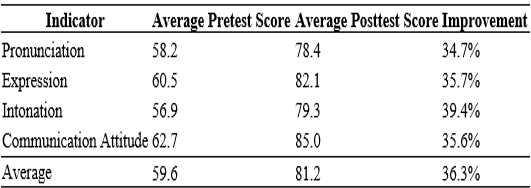
Maritime English is an essential competency for students in maritime vocational schools to prepare for global workforce challenges. However, students of Ampari Maritime Vocational School still faced difficulties in mastering technical terminology and practical communication skills required in maritime contexts. To address this issue, a community service program was conducted in the form of Maritime English training using the role play technique, which emphasized practical simulations of real-life situations such as emergency communication, work orders, weather reports, and radio conversations. The program involved 38 students from the Nautical and Engineering departments and was carried out through three stages: pretest, role-play training, and posttest. The results indicated a significant improvement in students’ communication skills, particularly in pronunciation, expression, intonation, and communicative attitude, with an average increase of 36.3%. Beyond linguistic gains, the program also enhanced students’ active participation, self-confidence, and readiness to engage in professional maritime communication. This community service activity demonstrates that role play is an effective contextual learning method for maritime vocational schools and has the potential to be replicated in other maritime education institutions.
References
Adam, M. W. S., Paudi, F., Ngaito, O., Hulopi, D., Hulopi, N., & Napu, H. (2025). Strategi Pembelajaran Role Playing dalam Meningkatkan Kepercayaan diri Siswa. Atmosfer: Jurnal Pendidikan, Bahasa, Sastra, Seni, Budaya, Dan Sosial Humaniora, 3(1), 327–339. https://doi.org/https://doi.org/10.59024/atmosfer.v3i1.1241.
Ahmad, H., & Utami, E. (2024). Pengaruh Teknik Role Playing Terhadap Keterampilan Komunikasi Verbal Siswa SMP. Realita Jurnal Bimbingan Dan Konseling, 9(1), 2283. https://doi.org/10.33394/realita.v9i1.10929.
Ahmmed, R. (2021). A framework for Maritime English language planning in Bangladeshi maritime education and training institutes. SN Social Sciences, 1, 1–22. https://doi.org/10.1007/s43545-021-00188-5.
Aprillina, A., & Abimanto, D. (2023). Karakteristik Bahasa Inggris Maritim Secara Kata dan Frasa. Sintaksis: Publikasi Para Ahli Bahasa Dan Sastra Inggris, 1(6), 72–83. https://doi.org/https://doi.org/10.61132/sintaksis.v1i6.365.
Bojović, M. (2024). Communicative Language Ability in Maritime English: Concept, Significance, and Assessment. Časopis Pomorskog Fakulteta Kotor − Journal of Maritime Sciences (JMS), 25(1), 34–51. https://doi.org/https://doi.org/10.56080%2Fjms240503.
Dirgayasa, I. W. (2022). Maritime English Learning Materials Based on Standard Training Certification and Watchkeeping for Seafarers (STCW) Curriculum and Intercultural Competence (IC). World Journal of English Language, 12(4), 65. https://doi.org/10.5430/wjel.v12n4p65.
Frolova, O. (2020). Integrating Standard Marine Communication Phrases into Maritime English Course. Pedagogy of the Formation of a Creative Person in Higher and Secondary Schools, 2(68), 212–215. https://doi.org/10.32840/1992-5786.2020.68-2.42.
Hafita, Y. A., Sulistiono, A., Sumarta, R. P., Saputra, D., Hasanudin, & Inang. (2023). Pelatihan Bahasa Inggris Maritim Melalui Role Play Method Kepada Siswa-Siswi SMKS Pelayaran Putra Samudra Sorong. Minda Baharu, 7(2), 277–286. https://doi.org/10.33373/jmb.v7i2.5797.
Hafita, Y. A., Sumarta, R. P., Riyanto, B., & Sulistiono, A. (2024). A Comprehensive Needs Analysis Of Maritime English for Ship Machinery Students. Exposure: Jurnal Pendidikan Bahasa Inggris, 13(2), 554–569. https://doi.org/https://doi.org/10.26618/exposure.v13i2.15389.
Hellystia, D., & Budiwaty, S. (2023). Communication Skills-Based Need Analysis on the Teaching and Learning of Maritime English for Vocational School. Journal of Language and Literature, 11(1), 14–31. https://doi.org/10.35760/jll.2023.v11i1.6444.
Hrnić, M. (2022). The Attitudes of Students and Teachers, Future and Former Seafarers, Towards the Importance of Maritime English. Nase More, 69(1), 30–39. https://doi.org/10.17818/NM/2022/1.5.
James, A., Schriever, U., Jahangiri, S., & Girgin, S. C. (2018). Improving Maritime English Competence as the Cornerstone of Safety at Sea: A Focus on Teaching Practices to Improve Maritime Communication. Wmu Journal of Maritime Affairs, 17(2), 293–310. https://doi.org/10.1007/s13437-018-0145-4.
Lestari, T., Mulyana, E. H., Nurzaman, I., Gandana, G., & Apriyaningsih, E. (2019). Exploring the integrating potentials of role playing with YouTube in building student’s self confidence. Journal of Physics: Conference Series, 1318(1). https://doi.org/10.1088/1742-6596/1318/1/012014.
Martes, L. (2015). Revision of IMO Model Course 3.17 Maritime English. Focus on Maritime English to Auxiliary Personnel. TransNav, the International Journal on Marine Navigation and Safety of Sea Transportation, 9(3), 309–313. https://doi.org/10.12716/1001.09.03.02.
Mazlan, M. P., & Wangid, M. N. (2023). The Influence of Role-Playing Methods on the Social Skills and Self-Confidence of Grade V Elementary School Students. International Journal of Multidisciplinary Research and Analysis, 06(09), 4077–4085. https://doi.org/10.47191/ijmra/v6-i9-19.
Rahayu, A. P. (2022). Improving Speaking English Ability Using Role Play Method for Elementary Students. ETJaR: English Teaching Journal and Research, 2(2), 83–90. https://doi.org/10.55148/etjar.v2i2.393.
Ridayani, R., & Purwanto, M. B. (2024). Enhancing Speaking Skills Through Role Play and Multimedia Technology. Refleksi: Jurnal Penelitian Tindakan, 2(2 SE-Articles), 33–43. https://publikasi.abidan.org/index.php/refleksi/article/view/413.
Shamsudin, R. I. B., Hasmin, N. A. B., & Azmi, N. A. B. (2023). The Use of Role Play in Enhancing Speaking Skill: The Perception of Polytechnic Students in The Communicative English Class. International Journal of Academic Research in Progressive Education and Development, 12(3), 2014–2023. https://doi.org/10.6007/ijarped/v12-i3/19311.
Şihmantepe, A., Solmaz, M. S., & Aşan, C. (2021). Improving Maritime English Oral Communication Skills in an Online Environment: Engaging Students as Teams. In C. H. Xiang (Ed.), Trends and Developments for the Future of Language Education in Higher Education (pp. 272–292). IGI Global Scientific Publishing. https://doi.org/10.4018/978-1-7998-7226-9.ch014.
Simanjuntak, M. B., Rafli, Z., & Utami, S. R. (2024). Impact of english language proficiency on maritime safety and environmental protection. E3S Web of Conferences, 577, 1–8. https://doi.org/10.1051/e3sconf/202457701002.
Sirbu, A., & Alibec, C. (2023). Communication Skills in Engineering Higher Education with a Focus on Maritime English in MET. Scientific Bulletin of Naval Academy, XXVI (1), 100–106. https://doi.org/10.21279/1454-864x-23-i1-012.
Tishchenko, O. (2021). Development Of Foreign Language Communicative Competence in Process Of Future Navigators’ Education. Series: Pedagogical Sciences, 2, 305–312. https://doi.org/10.31494/2412-9208-2021-1-2.
Downloads
Published
How to Cite
Issue
Section
License
Copyright (c) 2026 Yuniar Ayu Hafita, Ryan Puby Sumarta

This work is licensed under a Creative Commons Attribution 4.0 International License.