Promoting Prediction Strategy in Comprehending PISA Reading Text for Students at Universitas Timor
DOI:
https://doi.org/10.32938/jpsh.v4i2.9577Keywords:
higher level thinking, making prediction, reading strategy, prior knowledgeAbstract
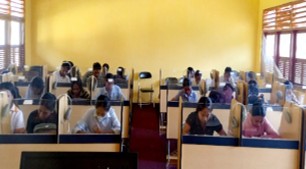
The ability to comprehend a higher level of text is important in this new era. In order to achieve the comprehension, students need more effective strategy in reading. Thus, this activity is promoting making prediction strategy in purpose to help students to engage with PISA reading text that require higher level of thinking. By making prediction, the students are trained to use their prior knowledge and connect it with the new information from the text. This activity was conducted in Universitas Timor and attended by 29 students in critical reading class. The results showed that prediction strategy effectively improve students’ comprehension and change their reading behaviour. The prediction test classified 70% of the students were in grade 4 and 3 at making prediction while the 30% were in grade 1 and 2. The excellent students were exposed that making prediction help them to actively interacting with the text and trained their mind to think and predict before, during and after reading. The students with low grade revealed their difficulties were in understanding the main idea and didn’t know how to use their prior knowledge. Therefore, it is necessary for the students to practice brainstorming to activate their prior knowledge.
References
Alfisyahrin, R. (2022). The Implementation of Prediction Strategy in Improving Students’ Reading Comprehension in English Recount Text [Thesis (Masters)]. UIN Ar-Raniry.
Aliah, A., Syam, U. K., & Mahmudah, D. R. (2025). The Use of Prediction Strategy to Enhance Students’ Reading Comprehension on English Recount Text. English Language Teaching Methodology, 5(1), 66–71. https://doi.org/10.56983/eltm.v5i1.922
Aprilia, D., Herlina, H., & Mortini, A. V. (2023). The Implementation of Direct Reading Thinking Activity to Improve Reading Comprehension. Esteem Journal of English Education Study Programme, 6(1), 117–124. https://doi.org/10.31851/esteem.v6i1.10225
Brod, G. (2021). Predicting as a learning strategy. Psychonomic Bulletin & Review, 28(6), 1839–1847. https://doi.org/10.3758/s13423-021-01904-1
Brod, G., Hasselhorn, M., & Bunge, S. A. (2018). When Generating a Prediction Boosts Learning: The Element of Surprise. Learning and Instruction, 55, 22–31. https://doi.org/10.1016/j.learninstruc.2018.01.013
Dewi, W. D. P. F., Santosa, M. H., & Dewi, K. S. (2023). The Effect of Nearpod Toward Tenth-Grade Students’ Reading Skill in A Public Senior High School in North Bali, Indonesia. PANYONARA: Journal of English Education, 5(2), 189–204. https://doi.org/10.19105/panyonara.v5i2.9979
Elihami, E., & Ismail, I. (2017). Increasing Students’ Reading Comprehension through Cognitive Strategies of Senior High School of Sidenreng Rappang Regency. Edumaspul: Jurnal Pendidikan, 1(2), 61–70. https://doi.org/10.33487/edumaspul.v1i2.41
Ismawati, E., Hersulastuti, H., Amertawengrum, I. P., & Anindita, K. A. (2023). Portrait of Education in Indonesia: Learning from PISA Results 2015 to Present. International Journal of Learning, Teaching and Educational Research, 22(1), 321–340. https://doi.org/10.26803/ijlter.22.1.18
Nanda, D. W., & Azmy, K. (2020). Poor Reading Comprehension Issue in EFL Classroom Among Indonesian Secondary School Students: Scrutinizing the Causes, Impacts and Possible Solutions. Englisia: Journal of Language, Education, and Humanities, 8(1), 12. https://doi.org/10.22373/ej.v8i1.6771
Ntereke, B. B., & Ramoroka, B. T. (2017). Reading Competency of First-Year Undergraduate Students at University of Botswana: A Case Study. Reading & Writing, 8(1). https://doi.org/10.4102/rw.v8i1.123
Pitogo, J. M. (2021). Prediction Chart: A Tool in Enhancing Reading Comprehension. International Journal of English Language Studies, 3(2), 17–25. https://doi.org/10.32996/ijels.2021.3.2.3
Prastika, R. M., Ismiyati, Y., & Munawwaroh, khidayatul. (2020). The Effect of Prediction Strategy Toward Students’ Reading Comprehension for the Tenth Grade Students at SMAN 8 Muaro Jambi. JELT: Journal of English Language Teaching, 4(2), 144–151. https://doi.org/10.33087/JELT.V4I2.63
Rahmawati. (2019). Peningkatan Keterampilan Membaca Berorientasi Strategi TPRC (Think, Predict, Read, Connect) Di Kelas Vi Sekolah Asar Negeri 023 Pulau Kijang Kecamatan Reteh. JURNAL PAJAR (Pendidikan Dan Pengajaran), 3(2). https://doi.org/10.33578/pjr.v3i2.7069
Sholikhah, H. A., & Azizah, M. (2019). Improving Reading Achievements in Descriptive Text by Using TPRC (Think, Predict, Read and Connect) Strategy. Southeast Asian Journal of Islamic Education, 1(2), 165–180. https://doi.org/10.21093/sajie.v1i2.1481
Yulita, D., & Saijao, M. F. (2022). Sosialisasi Pengenalan dan Penanganan Masalah Kecemasan Membaca Teks Bahasa Inggris Siswa-Siswa SMAN 1 Kefamenanu. Jurnal Pengabdian Sains Dan Humaniora, 1(1), 10–17. https://doi.org/10.32938/jpkm.1.1.2022.9-16
Yuzulia, I. (2021). A Study on Students’ Motivation Towards Learning English Language. Eltin Journal : Journal of English Language Teaching in Indonesia, 9(1), 10–17. https://doi.org/10.22460/ELTIN.V9I1.P10-17
Zawadzka, K., & Hanczakowski, M. (2019). Two Routes to Memory Benefits of Guessing. Journal of Experimental Psychology: Learning, Memory, and Cognition, 45(10), 1748–1760. https://doi.org/10.1037/xlm0000676
Downloads
Published
How to Cite
Issue
Section
License
Copyright (c) 2025 Delti Yulita, Febronia Lasi, Emanuel M. Y Hano'e

This work is licensed under a Creative Commons Attribution 4.0 International License.